Why Yellow? The Colour of Brazilian Gold
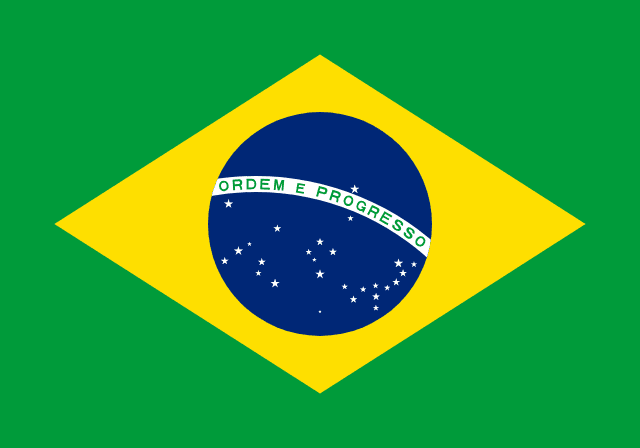
When Brazil first wore the yellow jersey in 1954, it was not merely a kit choice. The Brazilian flag's green and yellow — adopted in 1889 when Brazil became a republic — directly symbolise the country's natural wealth. The green represents the forests; the yellow represents the gold. Brazil was, for much of the colonial period, the world's largest gold producer. The Portuguese who colonised the country from 1500 extracted gold from the interior on a scale that reshaped the global monetary system.
The canarinho kit — the yellow of the Brazilian canary bird — first appeared after the 1950 World Cup humiliation on home soil, when Brazil lost the final to Uruguay in the Maracanã in what Brazilians still call the Maracanazo. The Brazilian Sports Confederation held a competition for a new kit design. The winning entry used the four colours of the Brazilian flag. The result was one of the most recognisable sports uniforms in human history — and it was gold.
Brazil's Gold Industry: The Amazon Paradox
Brazil produces approximately 80 tonnes of gold per year, making it the world's fourth-largest producer after China, Australia, and Russia. The country holds vast reserves — estimated at 2,400 tonnes of economically extractable gold — primarily in the states of Pará, Mato Grosso, and Minas Gerais (whose name literally translates as “General Mines”).
| State | Key mines | Est. annual output | Major operators |
|---|---|---|---|
| Pará | Carajás, Onça Puma | ~30t | Vale, Kinross |
| Mato Grosso | Alta Floresta, Parecis | ~20t | Various |
| Minas Gerais | Cuiabá, Paracatu | ~15t | AngloGold, Kinross |
| Others | Amazon basin | ~15t | Mostly garimpeiros |
The garimpeiros — informal, artisanal gold miners — represent one of Brazil's most controversial economic and environmental phenomena. Operating primarily in the Amazon basin, garimpeiros use mercury and hydraulic mining techniques that devastate river ecosystems and indigenous territories. The Yanomami indigenous reservation in Roraima has been particularly affected: an estimated 20,000 illegal garimpeiros were operating there in 2022, and the resulting mercury contamination affected the health of tens of thousands of indigenous people.
Why Brazil Holds So Little Gold in Its Reserves
Here is the paradox: Brazil produces 80 tonnes of gold per year but its central bank holds only 130 tonnes in official reserves — a fraction of its European competitors and less than 3% of total Brazilian foreign reserves. This seems counterintuitive for a major gold-producing nation. The explanation lies in Brazil's monetary history.
Brazil experienced decades of hyperinflation (cumulative 13,000,000% between 1985 and 1994), multiple currency collapses, and a default on external debt in the 1980s. The central bank has historically prioritised liquid, yield-bearing foreign exchange assets — primarily US Treasury bonds — over gold, which earns no return and is expensive to store. The Plano Real in 1994 finally stabilised the currency, but by then, Brazil's gold reserve philosophy had been set.
The irony is acute. Brazil digs gold from the earth, sells it to the world's central banks and jewellers, and receives dollars in return — which it uses to buy US Treasury bonds that yield approximately 4%. Meanwhile, the gold it sold has appreciated 250% in dollar terms over the past decade. Brazil's gold sector enriches its miners; it has not yet enriched its monetary policy.
The Football and Gold Parallel
There is a deeper parallel between Brazil's approach to gold and its approach to football. Brazil has produced more football talent than any nation in history — Pelé, Ronaldo, Ronaldinho, Zico, Cafu, Roberto Carlos — yet it has often failed to convert individual brilliance into institutional consistency. The same is true of its gold sector: extraordinary natural endowment, complicated by governance failures and institutional inconsistency.
What Brazil does have — and what makes it perpetually compelling in both gold and football — is an inexhaustible supply of raw material and raw talent. The Amazon basin holds enough gold for centuries. The favelas and football pitches of São Paulo, Rio, and Fortaleza produce world-class players on an industrial scale. Whether that wealth is converted into lasting institutional strength is the perpetual Brazilian question.