The Complete Golden Boot Record
| Year | Winner | Country | Goals | Gold price |
|---|---|---|---|---|
| 1954 | Sándor Kocsis | Hungary | 11 | $35/oz |
| 1958 | Just Fontaine | France | 13 | $35/oz |
| 1962 | Florian Albert / 5 others | Various | 4 | $35/oz |
| 1966 | Eusébio | Portugal | 9 | $35/oz |
| 1970 | Gerd Müller | West Germany | 10 | $36/oz |
| 1974 | Grzegorz Lato | Poland | 7 | $154/oz |
| 1978 | Mario Kempes | Argentina | 6 | $193/oz |
| 1982 | Paolo Rossi | Italy | 6 | $328/oz |
| 1986 | Gary Lineker | England | 6 | $341/oz |
| 1990 | Salvatore Schillaci | Italy | 6 | $380/oz |
| 1994 | Salenko / Stoichkov | Russia/Bulgaria | 6 | $384/oz |
| 1998 | Davor Šuker | Croatia | 6 | $294/oz |
| 2002 | Ronaldo | Brazil | 8 | $310/oz |
| 2006 | Miroslav Klose | Germany | 5 | $628/oz |
| 2010 | Thomas Müller | Germany | 5 | $1,200/oz |
| 2014 | James Rodríguez | Colombia | 6 | $1,290/oz |
| 2018 | Harry Kane | England | 6 | $1,257/oz |
| 2022 | Kylian Mbappé | France | 8 | $1,727/oz |
| 2026 | ? | ? | ? | $4,542/oz |
Just Fontaine's Record: Will It Ever Fall?
The outright record for World Cup goals in a single tournament belongs to Just Fontaine of France, who scored 13 goals at the 1958 Sweden World Cup. No player in the subsequent 68 years has come close. Fontaine played all six of France's matches; they lost in the semi-final and finished third. He scored in every single game and scored four in the third-place play-off.
The expansion of the 2026 World Cup to 48 teams — and from 64 to 104 matches — means the top scoring team will play up to 7 matches (versus 6 in previous 32-team tournaments). Mathematically, a prolific striker could now score in more games. Whether anyone approaches 13 goals remains one of the great open questions of the sport.
The Golden Boot at $4,542 Gold
Every World Cup since 1974 has taken place at a higher gold price than the one before. The 2026 tournament, at $4,542 per ounce, is the most expensive gold environment in tournament history by a wide margin. There is no causal relationship between the gold price and scoring rates — but the parallel is an interesting lens through which to read football's scoring history.
At the 1954 World Cup — the first tournament for which reliable goal data exists — gold was fixed at $35 per ounce. Kocsis scored 11 goals. By 2022, gold had risen 4,900% to $1,727 — and Mbappé won with 8 goals. The highest gold price era has coincided with the tactical sophistication that makes high goal tallies rarer. Whether 2026's $4,542 gold price coincides with a return to attacking football is the great unanswered question of the tournament.
The Physical Award Itself
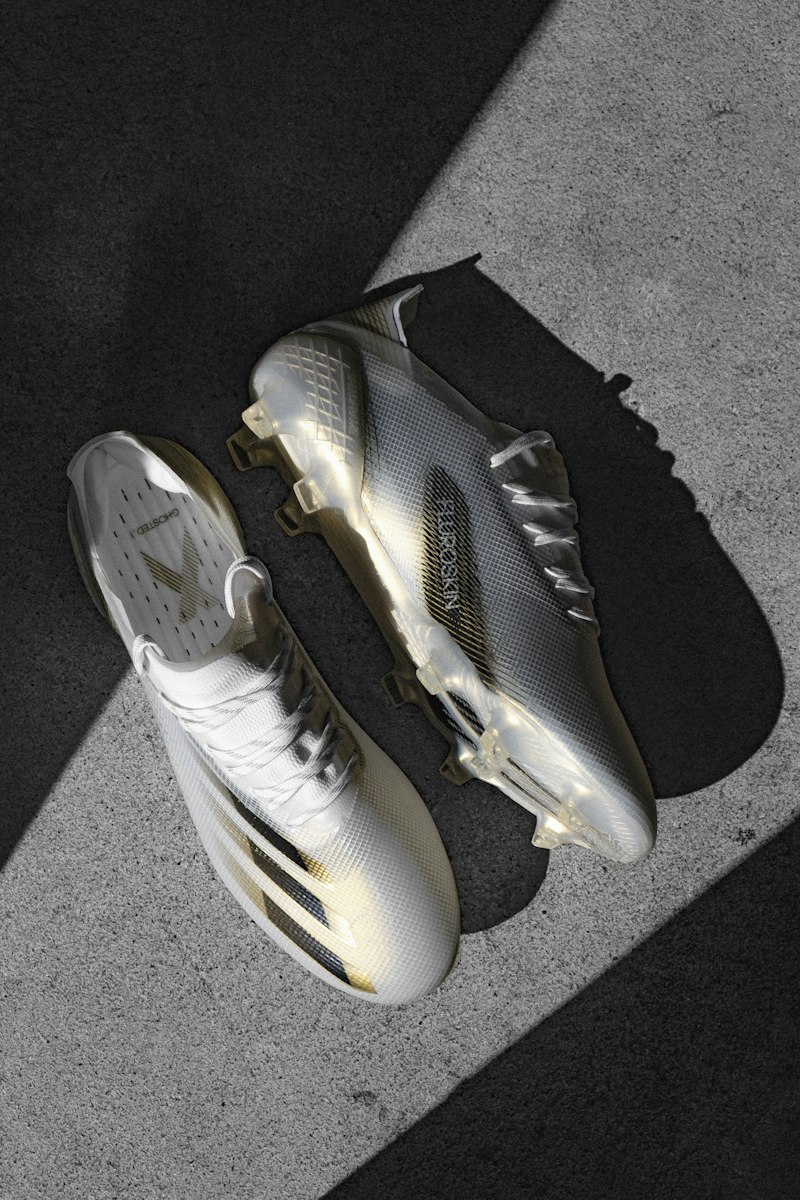
The Golden Boot award — formally the Adidas Golden Boot since 1966 — is a gold-plated boot replica, not a physical boot. The award is presented to the top goal scorer, with games played and assists used as tiebreakers. Players from nations eliminated early are eligible as long as their tally holds through the final matches.
The award's commercial history is significant: Adidas has been the exclusive boot sponsor of the Golden Boot award since 1966, giving the German sportswear company six decades of association with the tournament's top individual honour. The award's financial value to winners is primarily in endorsement uplift — a Golden Boot winner can expect a significant increase in boot and kit sponsorship valuations, potentially worth tens of millions over subsequent contract cycles.